
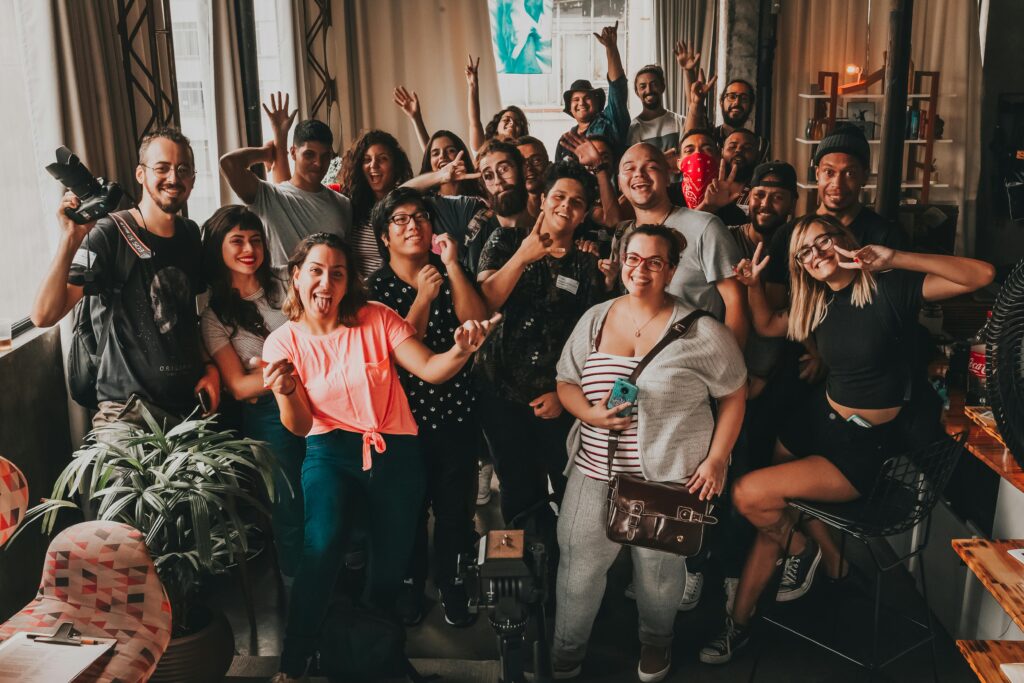
Workplace Community Is a Mental Health Strategy - Not a Cultural Bonus
In high-pressure industries, the conversation around mental health often centres on individual resilience – how well a person can manage stress, push through fatigue, or recover after a difficult incident. But after two decades working in clinical mental health and workplace wellbeing, I’ve observed something consistently: the single greatest predictor of how a person survives a demanding work environment is not just their individual capacity. It’s whether they feel they belong to something.
Community is not a soft benefit. It is a core component of psychological safety – and in sectors like aviation, mining, and high-stakes corporate environments, it is as operationally critical as any technical safety system.
The Connection Between Belonging and Mental Wellbeing at Work
The science is well established. When people feel genuinely connected to their colleagues and their organisation, their stress response changes. Cortisol levels drop, decision-making improves, and the threshold for burnout rises.
This is not theoretical. In safety-critical industries, where a single lapse in judgement can have catastrophic consequences, the psychological state of your workforce directly affects operational outcomes. Fatigue, isolation, and unaddressed psychological risk do not stay contained to the individual – they move through teams.
Research consistently shows that workers who report a strong sense of belonging take fewer unplanned absences, are more likely to disclose concerns early, and recover faster from critical incidents. That is the operational case for community in the workplace.
What Workplace Community Actually Looks Like in High-Pressure Sectors
Community in a corporate office looks different from community on a remote mine site or in an aviation crew room. The physical and structural realities are different. Shift patterns, FIFO rosters, and high crew turnover all create conditions where belonging is harder to establish and easier to erode.
That is why generic wellness programs so often fail in these environments. A mindfulness app designed for office workers does not address the psychological reality of a four-weeks-on, one-week-off rotation, or the specific pressure of operating under strict regulatory compliance with minimal margin for error.
Effective community-building in high-pressure industries requires intentional design. It means:
- Leadership that actively models psychological openness, not just safety compliance rhetoric
- Peer support structures that account for shift patterns and geographic distribution
- Mental health literacy programs that equip team members to recognise distress in colleagues, not just themselves
- Organisational cultures where early disclosure is rewarded, not managed away
This is the difference between a workplace that talks about mental health and one that has embedded it as a cultural norm.
Why Isolation Is a Systemic Risk, Not a Personal Failing
One of the most damaging narratives still circulating in high-pressure industries is that mental health struggles are a sign of individual weakness. That a strong professional pushes through. That if you need support, you are not suited to the role.
This narrative costs organisations far more than they realise – in lost productivity, in preventable incidents, in turnover, and in the quiet departure of experienced people who could no longer sustain the pace without support.
Isolation is not a personal failing. It is a systemic risk factor. And like all systemic risks, it requires a systemic response – not a helpline number buried in an HR intranet.
When an organisation assesses its psychosocial risk landscape, isolation and poor social connection should sit alongside fatigue and workload as identifiable, measurable hazards. Under ISO 45003 and current WHS frameworks, they already do. The question is whether your organisation has the diagnostic tools and the internal capability to address them.
Building Psychological Safety Through Connection: Where to Start
For organisations ready to move beyond awareness and into action, the starting point is rarely a training program. It is a diagnostic.
Before investing in workshops or wellbeing initiatives, leadership needs to understand the current psychological climate – where connection is strong, where it is fragile, and where the organisation’s systems are inadvertently creating isolation or distrust.
This is the foundational work. It is what separates a wellbeing strategy from a wellbeing gesture.
From there, tailored programs can address the specific gaps your organisation faces – whether that means mental health literacy for frontline supervisors, resilience coaching for executives managing sustained pressure, or structured peer support frameworks for distributed or FIFO workforces.
The organisations that get this right do not just reduce their risk profile. They build teams that perform better under pressure, retain experienced people, and create cultures where the work itself feels sustainable.
Frequently Asked Questions
How does workplace community affect mental health?
Is community-building relevant in FIFO or shift-based workplaces?
Where does community fit within a psychosocial risk framework?
What is the first step for an organisation wanting to improve psychological safety?
About the Author
Mabble Munyimani is the Founder and Managing Director of MM Complete Wellbeing Global. With over two decades of experience in clinical mental health, leadership development, and workplace wellbeing, Mabble works with organisations in aviation, mining and resources, corporate, and education sectors to build psychologically safe, high-performing teams. She is the developer of the SAFE Pillars framework and leads diagnostic and advisory engagements globally.